Broker Desk: AI-Powered Financial News Automation Platform
A content automation platform for capital markets desks and financial newsrooms that ingests RSS feeds, enriches every article with LLMs, generates branded visuals, and pushes the result to email and X, all from one analyst dashboard.
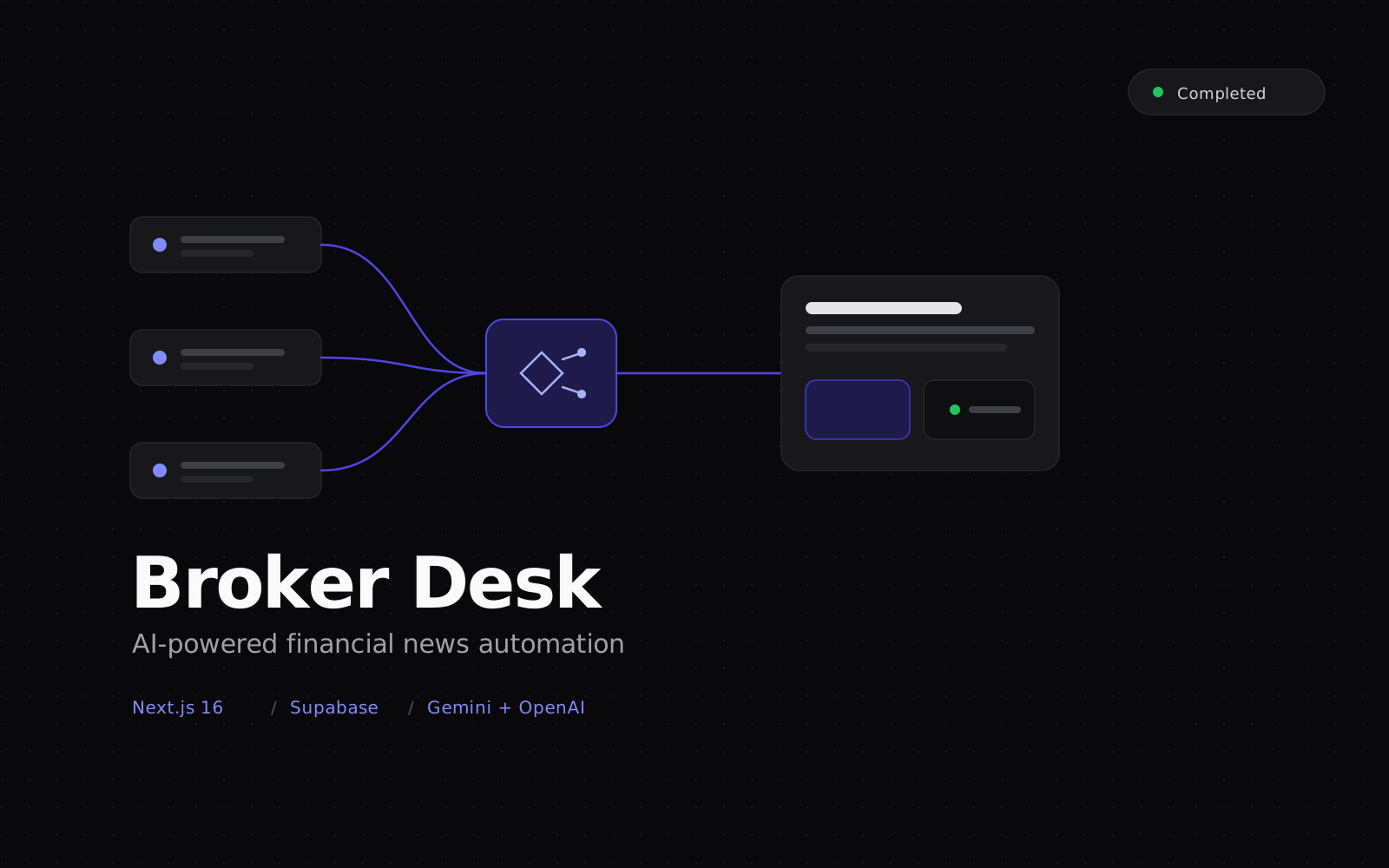
Broker Desk is the system a capital markets desk reaches for when reading feeds, drafting headlines, designing graphics, and scheduling posts is consuming half the day. It pulls in RSS feeds, runs each article through an LLM for a clean Turkish headline and a short summary, generates a finance-themed image, and lines everything up for an analyst to approve. What used to be a multi-hour pipeline turns into a queue of decisions.
It is built for brokerages and trading desks, financial analysts and commentators, newsroom and social teams at financial institutions, and content operations covering currencies, equities, crypto, and commodities.
The pipeline: RSS sources are pulled on a fixed schedule through Netlify Scheduled Functions, with health tracking on each feed and explicit handling for CloudFront-protected sources that block default fetchers. Each new article goes through an LLM enrichment step backed by Gemini 2.5 Flash Lite over OpenRouter, with a fallback chain that drops into a heavier Gemini tier and then OpenAI GPT-4o-mini Search if the primary fails. The model produces a clean Turkish headline, a short summary, and a market-impact signal. Prompts are tuned for currencies, equities, crypto, and commodities specifically, and the English-to-Turkish translation pass is part of the prompt rather than a second hop.
Editorial workflow: Articles flow through a kanban-style board (New, Processing, Pending Review, Approved, Rejected) with inline editing, batch operations, filtering, and live search all in the same view, so an analyst can clear a backlog without context-switching between screens. Approved articles can be expanded into longer-form briefs from the same surface.
Visual generation runs on two paths: Fast templates use @vercel/og to render finance-themed layouts (markets, currencies, crypto, economy, companies) across Twitter, Instagram, LinkedIn, and Stories formats. Custom imagery uses Gemini's text-to-image generation for one-of-a-kind visuals when a template will not do. The image stack is built around a clean provider interface, so FAL AI and ChatGPT Images 2.0 sit alongside Gemini as drop-in providers selectable from the UI along with quality and model picker choices.
Distribution and context: SMTP delivery for email through Gmail, Office 365, or any cPanel-style host, with credentials encrypted at rest using AES-256-GCM. X posting through OAuth 2.0 with per-send tracking and a delivery attempt log. An economic calendar widget surfaces upcoming events so the analyst writes with the right context.
Stack and infrastructure:
- Next.js 16 App Router on React 19 with TypeScript, Tailwind, shadcn/ui, and next-intl for Turkish and English
- Supabase Postgres with Row Level Security and JWT auth, with rollback companions for the SQL migrations that ship the data model
- A pluggable image-provider abstraction so new image models can be added without touching the call sites
- An audit subsystem that records editorial and automation events (X posting, email integration, user role changes, blog generation) for compliance reviews
- Admin, Moderator, and User roles enforced at the application layer and at the database through RLS policies
- Netlify hosting on Node 22 with hardened security headers (X-Frame-Options DENY, X-Content-Type-Options nosniff, X-XSS-Protection) and shared-secret-gated automation endpoints
- Per-IP rate limiting on image generation endpoints to stay within provider limits
- A hand-crafted SVG icon library covering crypto, currencies, commodities, precious metals, and indices
The result is a content pipeline a financial institution can sign off on: every step is logged, every model call is recoverable through the fallback chain, and the analyst stays in the loop on what actually goes out.