The Novelty That Came With the Renaissance in Europe
 Mustafa Kürşad BAŞER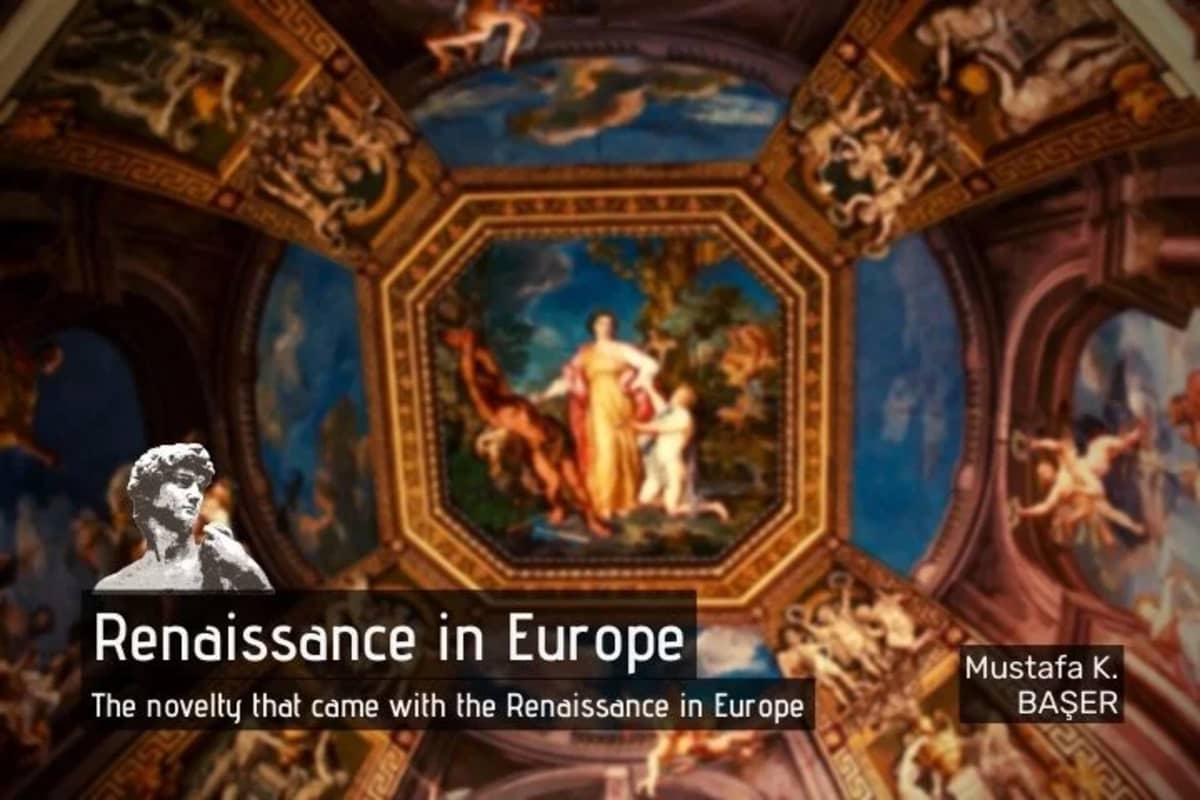
The Renaissance Movement
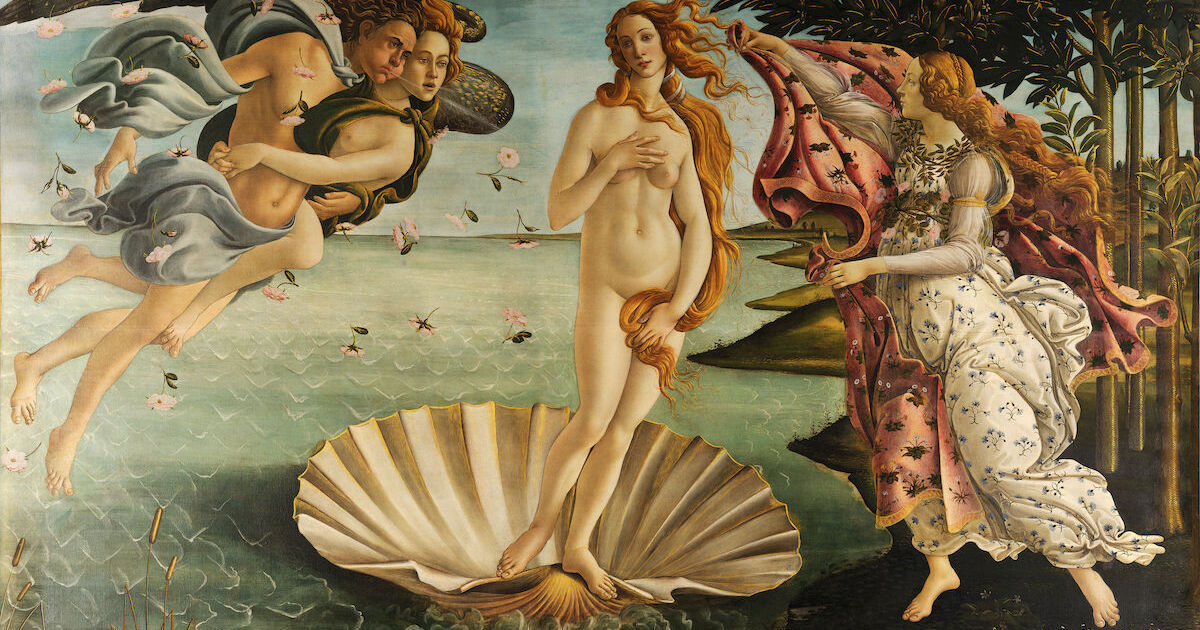
Walk into any museum and you can date a painting without reading the label. Flat gold backgrounds, figures floating at odd scales, everyone looking straight ahead: medieval. Depth, shadow, bodies that have weight: Renaissance. Something changed between the two, and it was not only technique. Below I want to trace what that change actually was.
It began in the Italian city-states in the 14th century and worked north across the 15th and 16th centuries, reaching France, Germany, England, Spain and the Netherlands. The name means rebirth: Greek and Roman texts, long held in monastery libraries and Islamic scholarship, came back into circulation. Worth noting that nobody living through it called it the Renaissance. Giorgio Vasari wrote of a “rinascita” in 1550, Jules Michelet used the French word in the 1850s, and it was the Swiss historian Jacob Burckhardt who made it stick with his 1860 book “The Civilization of the Renaissance in Italy”. The label is a verdict passed three centuries later.
Money mattered as much as ideas. Florence had banking wealth, and the Medici spent it on artists. Brunelleschi closed the dome of the city’s cathedral in 1436, a span nobody had managed since antiquity, and he did it without the timber centring everyone assumed was necessary.
Then, around 1440, Gutenberg. A manuscript that took a scribe months became something a shop could run off in a day. Ideas that used to travel at the speed of a copyist now moved at the speed of a printing run, and almost everything that follows depends on that one fact.
The contrast with the Middle Ages is real, though the usual telling overstates it. Church patronage set the subject matter, so painting meant religious painting, and the great building projects were cathedrals. Indulgences were sold. Literacy sat largely with the clergy. But the phrase “dark ages” is a Renaissance invention, coined by people with an interest in making their own century look bright by comparison. Medieval Europe built Chartres and founded Bologna and Oxford. It was not empty; it was pointed elsewhere.
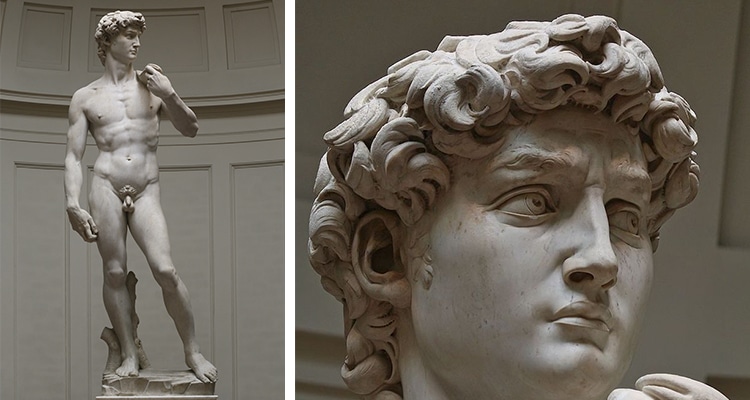
What the Italian artists did was study anatomy directly. They dissected bodies, measured proportion and looked hard at surviving Greek and Roman sculpture. Michelangelo carved the David between 1501 and 1504 out of a marble block two earlier sculptors had abandoned as ruined. You can see every tendon in the right hand. Subjects widened too: biblical scenes still dominated, but mythology, portraiture and the human figure for its own sake now had a place. Bronze, marble and wood were the materials, and balance and proportion were the shared obsession.
Underneath the art sat a change in outlook. Humanism, gathering pace in 14th-century Italy, held that human achievement in scholarship, art and civic life was worth studying on its own terms. This was not atheism; most humanists were devout. But once you take seriously the idea of reading ancient texts in the original, you start applying the same method to scripture. Lorenzo Valla did exactly that in 1440 and proved the Donation of Constantine, a document underpinning papal territorial claims, to be a forgery. The tools of scholarship turned out to cut both ways.
The same decades opened new sea routes to the Americas, India and the Far East. Wealth and unfamiliar goods flowed back, and with them questions the inherited authorities simply could not answer. Aristotle had nothing to say about a continent nobody had written down.
Slowly, argument from authority gave ground to observation. That shift is the period’s most durable legacy.

The names cluster remarkably tightly. Donatello, Leonardo, Michelangelo and Raphael in art; Copernicus, Galileo and Descartes in natural philosophy. Copernicus put the sun at the centre in a book published in 1543, the year he died. Galileo turned a telescope on Jupiter in 1610, found four moons circling something that was not the Earth, and spent his last years under house arrest for saying so.
Then in 1517 Martin Luther published ninety-five theses attacking the sale of indulgences. Similar complaints had been made before and had gone nowhere. This time the printing press carried them across Germany in weeks. The Reformation that followed split Western Christianity permanently, and it is hard to separate from the humanist habit of going back to the original text and asking whether the institution matched it.
Conclusion
So what actually changed?
Not that Europe suddenly became clever. What changed is where authority sat. Antiquity was recovered, printing made ideas cheap to copy, and the habit of checking a claim against the thing itself started to outrank the habit of checking it against a text. That is a small-sounding shift with three centuries of consequences behind it.
It is worth keeping the scale honest. This was a movement of courts, banking families and a thin layer of scholars. For the farmer outside Florence, the 15th century looked much like the 14th. The same voyages that carried the new learning outward carried conquest and slavery with them. And the period had a hard edge: Galileo’s house arrest was not an aberration. None of that makes the achievement smaller. It just means the rebirth was narrower, slower and more contested than the name suggests.
References
- History.com Editors. (2022, October 17). Renaissance. HISTORY. https://www.history.com/topics/renaissance/renaissance
- History of Europe | Summary, Wars, Map, Ideas, & Colonialism. (2022, October 18). Encyclopedia Britannica. https://www.britannica.com/topic/history-of-Europe/Arts-and-letters
- Renaissance: What is Renaissance? (n.d.). USEUM. Retrieved October 18, 2022, from https://useum.org/Renaissance/What-is-Renaissance

Mustafa Kürşad Başer
Senior Software Engineer
A passionate software engineer who enjoys creating elegant solutions to complex problems. Beyond coding, I am deeply interested in exploring the intersections of technology, art, and human consciousness.